How to turn planning applications into jobs
The public planning register is the earliest reliable signal of domestic construction spending in the UK. It is also free, dull to read and almost nobody works it properly. This is how we would run it if we were the ones sending the letters.
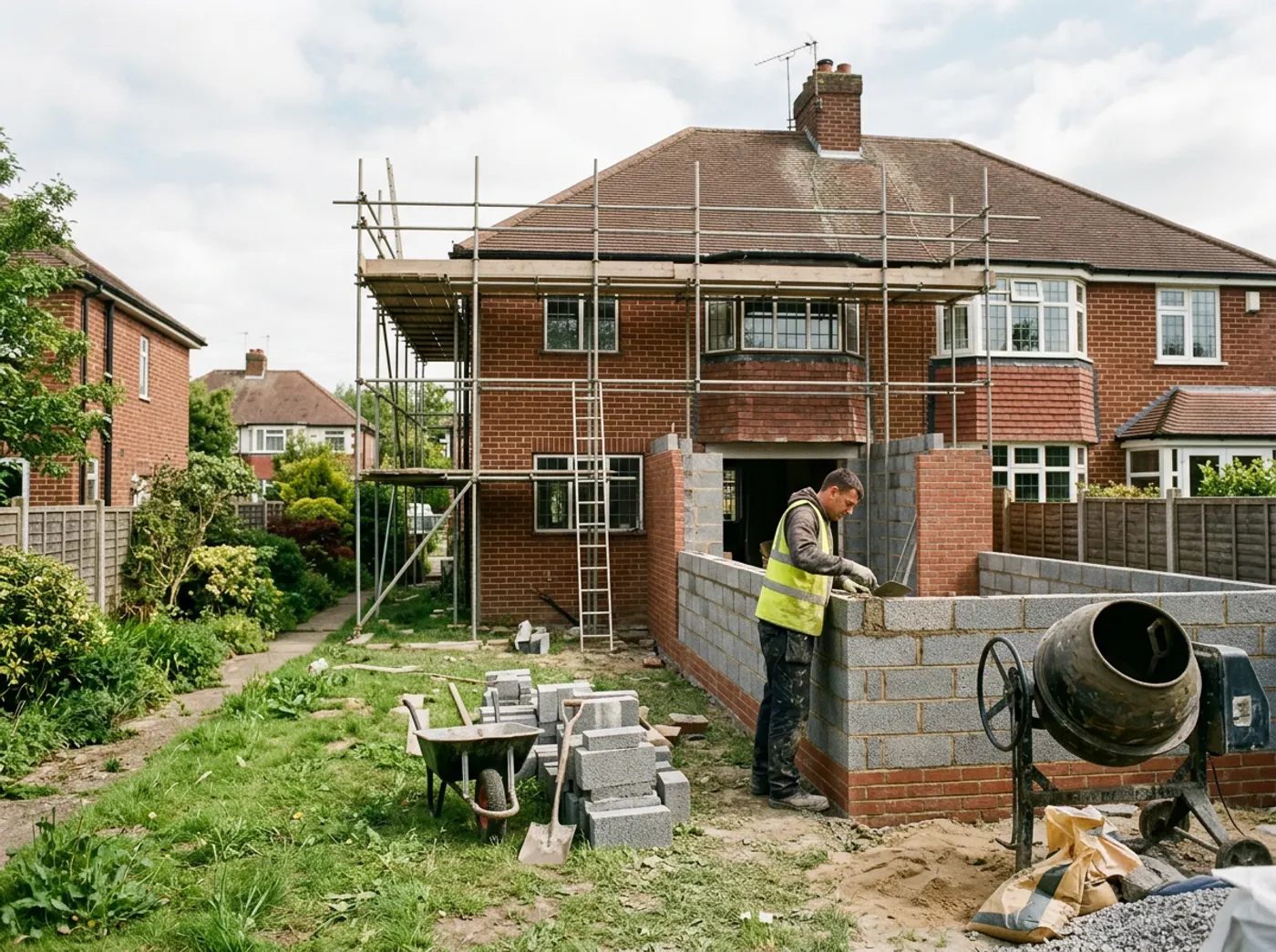
Eight chapters, in the order you will need them
Why a planning application is buying intent
Most lead sources catch a homeowner at the moment they start looking for a supplier. By then the project is months old: they have had the idea, argued about the budget, drawn something up, paid an architect and applied to the council. The search you are bidding on is the last step, and you are bidding on it against everyone else who noticed.
A planning application is several steps earlier and considerably harder evidence. Filing one costs money and takes weeks of effort. Nobody applies for a rear extension idly. By the time an application is validated, the household has already decided to spend, has usually decided roughly how much, and has a drawing that names the work. That is a stronger signal of intent than any search keyword, and it is published, by law, on a public register.
The gap between that publication and the first supplier phone call is the whole opportunity. On a single-storey rear extension, the bricklayer is needed almost immediately after consent, the roofer around two to four months later, and the glazier three to six months after that. If you are a window company, you are looking at a household that will need you next spring — and will start shortlisting in about four months. There is no other channel that lets you be early on purpose.
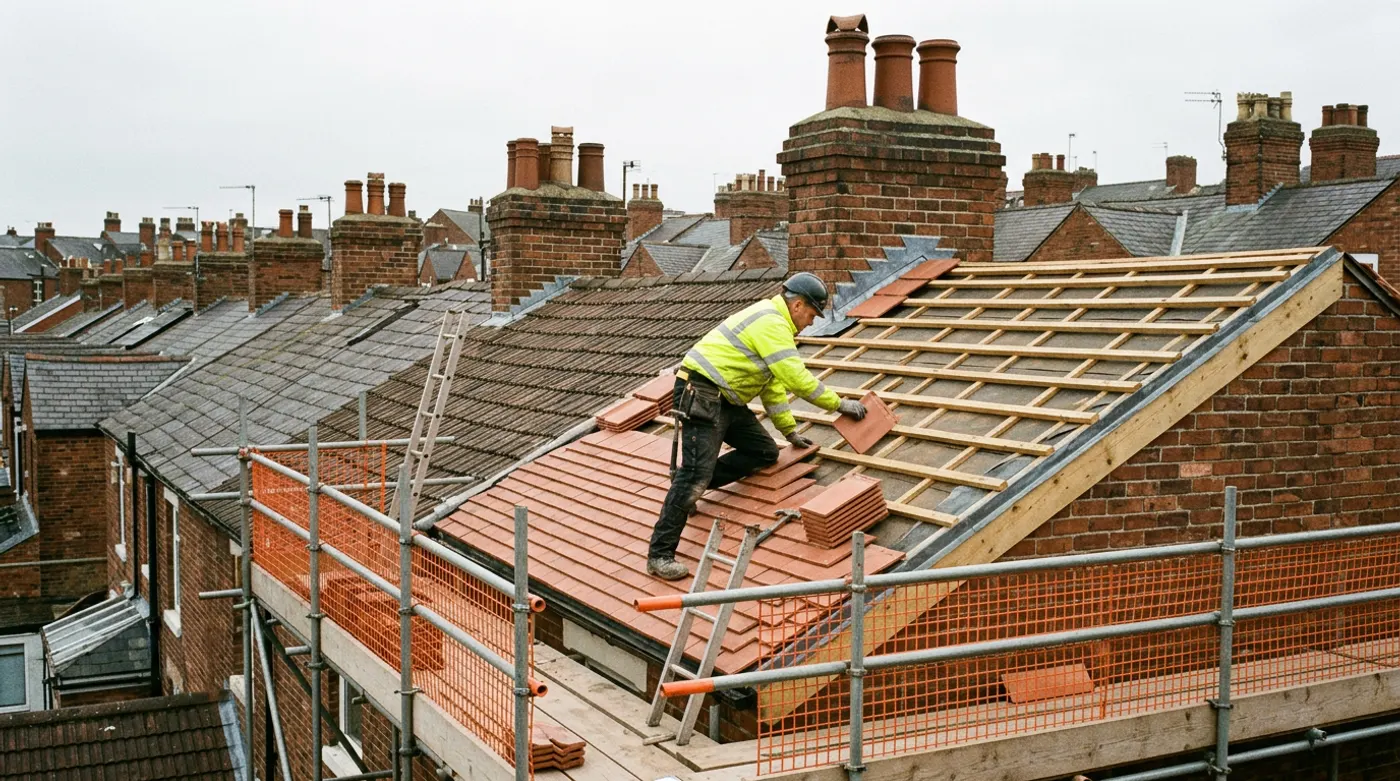
One rear extension, three trades
Who the household needs, and when, after consent.
- Straight awayBricklayerFootings and blockwork start as soon as the decision lands.
- 2–4 monthsRooferOnce the walls are up and the structure is ready to close in.
- 3–6 monthsGlazierShortlisting starts around month four, fitting after that.
What the register does not tell you
Being honest about the gaps is what makes the rest of this usable.
It does not tell you they will build
A meaningful share of consents are never implemented — the money falls through, the house sells, the quotes come back too high.
It does not tell you they need you specifically
Plenty of applications arrive with a builder already appointed, and some are filed by the contractor. That is why our matching carries an explicit confidence tier rather than pretending every row is equal, and why loft and solar applications in particular are rated medium and not high.
It does not give you a warm lead
The homeowner has not asked to hear from you. This is cold outreach against exceptionally good targeting — not an enquiry.
It does not give you a name
Applicant names are not something we store or pass on, which is exactly why the outreach is postal and addressed to the occupier.
Anyone selling you planning data with a conversion rate attached is guessing. We do not publish one, because we have not measured one across enough trades and patches that we would stand behind it in public.
How demand windows work
A raw list of consents is close to useless — you would be mailing a roofing letter to a household eight months before the roof exists, and a kitchen letter after the kitchen is bought. What makes the register workable is turning each application into a set of dated trade opportunities.
The mechanism is a trigger table. Each application's type and description is matched against a list of triggers, and each trigger maps to the trades it implies, with a window in months and a confidence rating. A loft conversion with a rear dormer implies roofing at zero to three months, glazing at two to five, scaffolding at zero to two and skip hire at zero to two. A re-roof implies scaffolding almost immediately, and solar as an opportunistic follow-on, because a re-roof is the cheapest moment a house will ever add panels.
Run your postcode or councils through the same trigger model and see how many are yours.
| Trade | Window | Confidence |
|---|---|---|
| Scaffolding | 0–2 months | high |
| Skip hire | 0–2 months | high |
| Roofing | 0–3 months | high |
| Glazing | 2–5 months | medium |
Windows count from the expected decision date, not the day the application was filed.
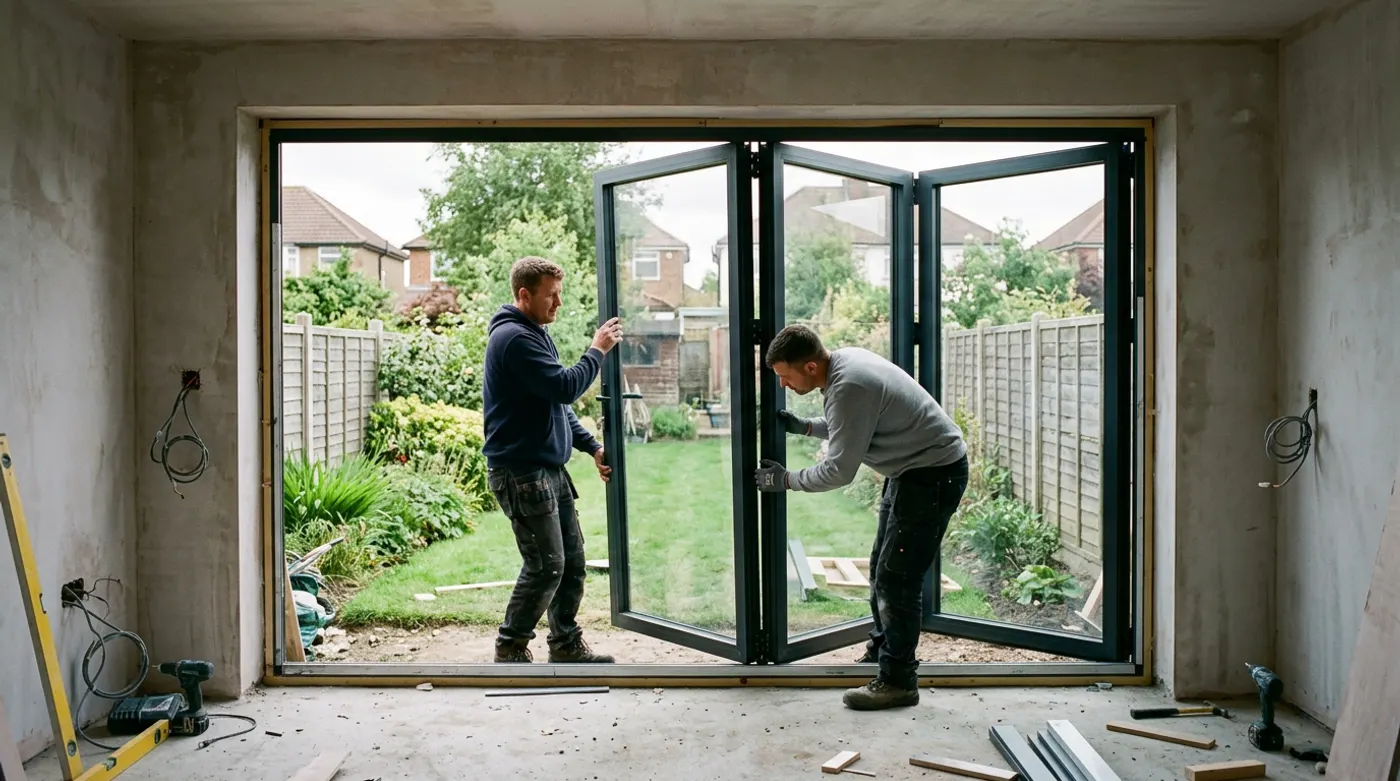
Four details matter more than people expect:
- Windows are measured from the expected decision, not from the application date. Councils are not fast. A window that started at validation would have you mailing while the household is still waiting to hear whether they are allowed to build at all.
- The most specific trigger wins. A description mentioning a kitchen extension is treated as a kitchen job, not as a generic extension, because the generic reading loses the timing.
- Whole categories are excluded rather than scored low. Tree works, advertisement consents, discharge of conditions, non-material amendments and reserved matters are stripped out up front. Outline consents are excluded too: the detail, and the trades, are years away.
- Weak signals are demoted, not dressed up. A lawful development certificate means somebody is checking whether they can build before committing, so the confidence drops a tier and the window shifts later. Schemes of ten or more dwellings drop to low confidence, because that work is bought through national supply chains and not by the household.
The practical upshot for you: mail the window, not the consent date. For demolition, skip hire, scaffolding and re-roofing, the window opens straight away. For windows, kitchens and landscaping on an extension project, it opens months later — and a letter that arrives in month one is a wasted stamp that also burns your one clean first impression.
The letter: what to actually send
One page, plain, no gloss brochure on the first touch. The brochure is for people who have already put their hand up; the first letter's only job is to be read and believed.
What earns it a read:
- Say how you know. Cite the planning reference and the council. This is the single most important line in the letter. Without it you are junk mail; with it you are a local firm that pays attention to what is being built nearby. It also lets the reader verify you in ten seconds.
- Match the letter to the trigger. A re-roof letter and an extension letter should not be the same letter with a word swapped. Reference the actual work: the dormer, the driveway, the kitchen-diner.
- Be specific about proof. One recent, named, nearby job beats three paragraphs of adjectives. Street or village level is enough.
- Give one clear next step and make it low commitment — a call to talk through timings, not a hard push for a survey booking on a project that has not started.
- Make it easy to say no. An opt-out address, honoured properly, costs you nothing and keeps you out of trouble.
Every address arrives with the planning reference, the council and the trigger it matched, so line one writes itself.

Timing and follow-up cadence
Single letters do not work. Neither does mailing every month until the household hates you. A window gives you a natural structure:
- As the window opensLetter oneThe introduction, with the planning reference and the proof point.
- Four to six weeks laterLetter twoDifferent content, not a nudge. Something genuinely useful for someone at their stage: what tends to go wrong at this point in a build, what to check in a quote, realistic lead times for materials.
- Near the far edge of the windowLetter threeShort, direct, last touch. This is the one that catches people whose build slipped, which is most of them.
Then stop, and suppress the address so it does not reappear in a later batch. Three touches across a window is a sensible ceiling. Past that you are paying Royal Mail to annoy someone who has already chosen a supplier.
A fresh, deduplicated, suppression-checked batch every month. No contract, cancel any time.
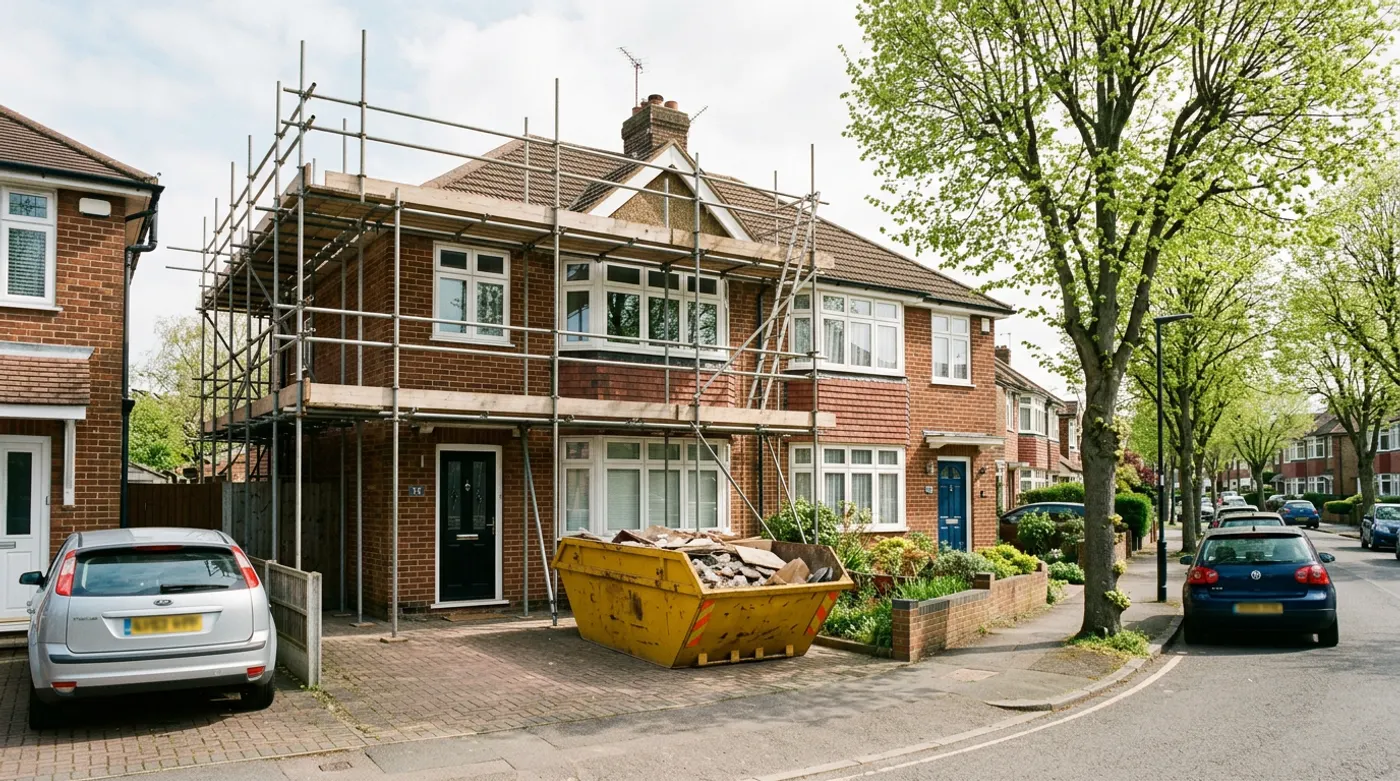
Batch, don’t dribble
Print and post in batches rather than dribbling letters out; consistency beats volume and a monthly rhythm is easy to sustain.
Expect little back in month one
Your first list is the back catalogue, so it is normally the biggest you will ever get: every project in your patch still inside its window, not simply the last few weeks. What it cannot give you is a mature pipeline, because a letter takes time to turn into a survey and a survey takes time to turn into a job. The channel compounds: by month four you have three earlier cohorts maturing into their windows at the same time as the new one arrives.
The compliance posture
This is the part that decides whether working the register is a durable channel or a complaint waiting to happen. The line we hold, and require:
Mail only — no email, no SMS, no cold calls. Each letter should cite the planning reference and carry an opt-out address.
- Postal only. No email, no text messages, no cold calls, no matter what you can find elsewhere. Electronic marketing carries its own consent rules; addressed postal mail to an occupier does not sit in the same regime, which is precisely why the product is built this way.
- No names. Applicant names are not stored and not supplied. Letters are addressed to “The Owner/Occupier” at the property, because the thing we know about is the property and its consent, not the person.
- An opt-out on every letter, honoured on every future batch. Suppression is part of the tooling for a reason: an address that asks to be left alone must never resurface.
- One household, one letter per batch. Multiple applications on the same property do not earn multiple mailings.
- Do not imply council endorsement. You read a public register. Say that plainly if asked.
The register is published so the public can see what is being built. Working it respectfully is not just ethics — it is what keeps the channel available. This is our operating posture rather than legal advice, and you should take your own on how marketing rules apply to your business.
How to judge whether it worked
Put a tracking mechanism on the letter
A dedicated phone number, or a short quote code you ask people to mention — because otherwise everything gets attributed to word of mouth and you will conclude it did nothing.
Judge it by cohort, not by week
The right question is how many jobs came out of the households you mailed in a given month, measured after their windows have fully closed. That can be six months of patience on an extension-driven trade. Judging a mail campaign at two weeks tells you nothing except how quickly you get bored.
Track the cheap negatives
Letters returned undelivered, and opt-outs. A rising return rate means an address quality problem worth raising with us. A rising opt-out rate usually means the letter is too pushy for how early it is.

Six months of patience
“Judging a mail campaign at two weeks tells you nothing except how quickly you get bored.” Set the review date when you post the first batch, not when the phone goes quiet.
Where the triggers land for your trade
Each trade sees a different slice of the same register, with different windows. The pages below show the real matching table for each one — the triggers, the demand windows, the confidence tiers and the reasoning printed on every row.
Straight answers
Demand Radar or the Business plan — which one do I need?
Same price, different product. Demand Radar posts you an addressed mailing list every month for one trade in your patch, with exclusive cover: it is for firms that write to homes. The Business plan is alerts, keyword rules, a dashboard and an API across any councils you name, with no addresses: it is for firms that want to know the moment something is filed and contact people their own way. If you want letters through doors, Radar. If you want a feed, Business.
Where does the data come from?
Published planning applications from the UK planning register — planning.data.gov.uk plus direct council sources, covering 378 local authorities. That register is public information. What you pay for is the trade-trigger matching, the demand-window timing, the deduplication and the suppression, not the raw fact of the applications.
How far back does the first list go?
There is no fixed cut-off date. We look back across the register and keep only the applications whose buying window for your trade is still upcoming, open or closing. In practice that means most of a first list is the last six months of live projects, plus a tail of larger builds from further back that are only now reaching your stage. Anything finished or already past its window is dropped, and each household appears once and is never sent to you twice — as is anything refused or withdrawn, unless your trade is architects and planning consultants, where a stalled application is the whole point. Whether that first list comes out bigger or smaller than the 90-day figure on the patch checker depends on how long your trade's buying window is, and it goes both ways. A long-window trade — glazing, kitchens, flooring — gets a much bigger first list, because consents from six or twelve months back are only now reaching its stage. A fast-window trade like skip hire or demolition gets a smaller one, because a nought-to-three-month window has already closed on a good share of what the checker counted. Either way later months are smaller than the first: they carry new applications only.
Why postal outreach only? Can I get phone numbers?
No, and that is deliberate. The register is published for planning transparency, not to build a calling list. We store no applicant names, so there is nothing to phone: letters are addressed to "The Owner/Occupier" at the property. Mail only — no email, no SMS, no cold calls — and every letter should cite the planning reference and carry an opt-out address. Firms that want a dialler list are not a fit for this product.
How many other PlanWatch letters will the same household get?
One planning application can be work for several trades, so we limit how many of our subscribers can post the same household in the same month. A shared-cover subscriber may see a few addresses held back until the next month, and the dashboard and batch email say how many. Exclusive cover is never held back by that limit: an exclusive subscriber always gets every address in their patch.
How does exclusivity work?
One subscriber per trade, per patch. The check runs before you pay: if another firm in your trade already holds those councils or postcode areas, we tell you at signup and take no money. Exclusivity is scoped to your trade only — a roofer and a window company can both hold the same town without clashing.
Can I cancel?
Yes. Billing is monthly and you can cancel at any time; cover runs to the end of the month you have paid for, then the patch is released for someone else. There is no minimum term and no contract to exit.
What happens when I sign up today?
You go straight to secure checkout, and your first list is generated within 24 hours of activation rather than a month later. That first list is not a snapshot of the last few weeks: it carries every live application in your patch whose buying window for your trade is still upcoming, open or closing, which in practice is most of the last six months plus some larger builds from further back that are only now reaching your stage. Finished jobs are dropped and each address appears once. Refused and withdrawn applications are dropped too for every building trade — with one deliberate exception: on the architects and planning consultants list they ARE the list, because a refusal is the moment a household discovers it needs drawings. After that a fresh list arrives every month covering new applications only, so it will be smaller than the first. If your patch turns out to be thinner than you expected in that first month, tell us and we will sort it out.
See what is in your patch right now
Enter a postcode or name the councils you cover. We run the last 90 days of the register through the same trigger model and tell you how much demand for your trade is sitting there. No card, no sign-up.