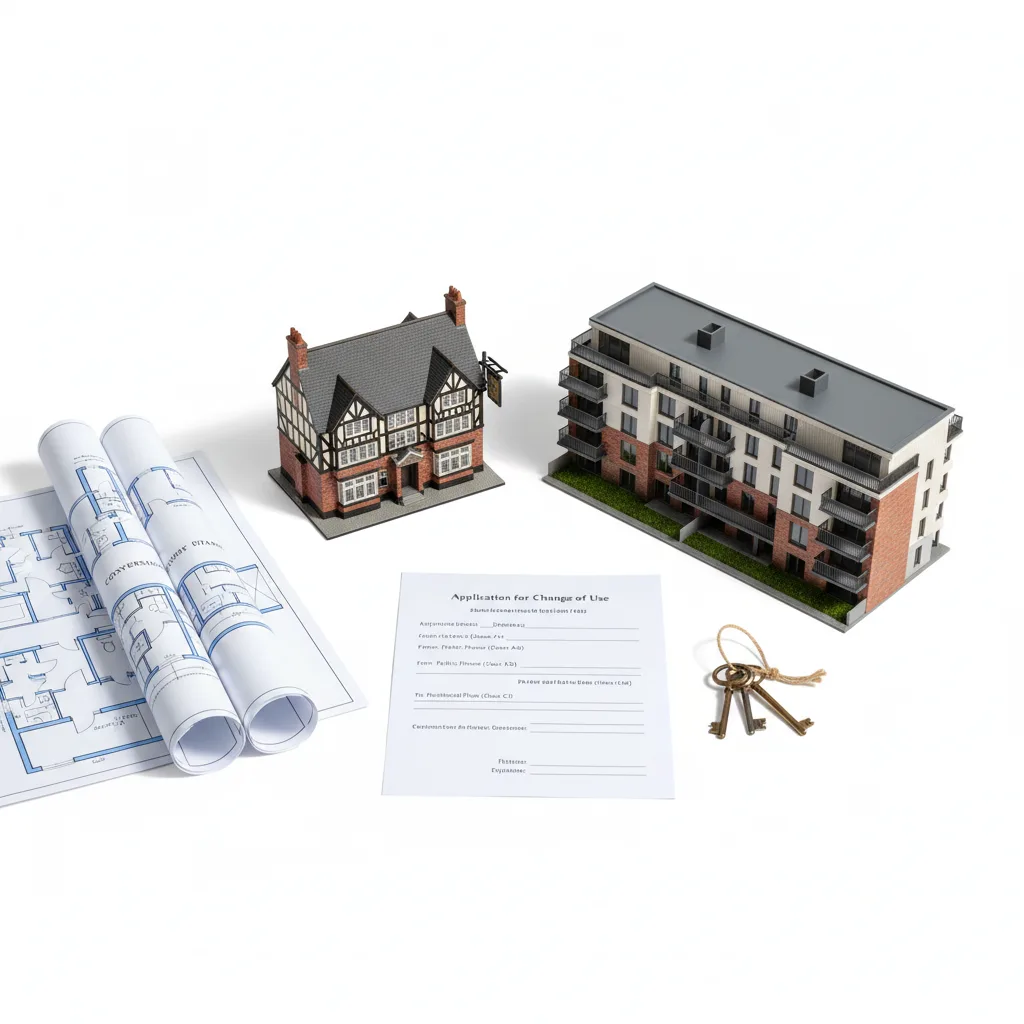

Pubs are now sui generis (outside any use class) since 2017, meaning any conversion to residential always requires planning permission — but shops and offices fall within Class E and may convert to residential under Class MA prior approval without full planning permission. Registering a building as an Asset of Community Value (ACV) under the Localism Act 2011 gives the community 6 months to bid and restricts PD rights. This guide covers your objection rights, ACV protections, and practical steps to protect community facilities.
What's Happening?
🔍 Affected by this? Check planning applications near you — Search your postcode free →
Key Pub/Shop Conversion Facts (England, 2024)
- Pubs: sui generis since 2017 — always need planning permission for change of use
- Class MA: commercial (E) to residential (C3) via prior approval
- Class MA requirement: 2+ years in commercial use
- Prior approval fee: £120 per dwelling
- Asset of Community Value: 6-month community bid period when put up for sale
- ACV nomination: parish council, neighbourhood forum, or 21+ member community group
The conversion of commercial properties to residential use has become increasingly common, driven by high residential property values and changes to planning rules that make conversion easier in many cases.
Types of Conversion
Pubs to residential: Converting public houses to flats or houses, sometimes including partial conversion that retains some pub use.
Shops to residential: Converting retail units to flats, particularly common with smaller shops in residential areas.
Mixed conversions: Converting parts of commercial premises while retaining some commercial use.
Complete redevelopment: Demolishing commercial buildings and replacing with residential development.
Permitted Development Rights
Crucially, many commercial-to-residential conversions now have "permitted development" rights under Class MA, meaning they don't need full planning permission:
Prior approval required: Even with permitted development rights, developers usually need "prior approval" for transport, noise, contamination, and flooding impacts.
Size limits: Conversions are limited to buildings up to 1,500 square metres of floor space.
Location restrictions: Some areas (conservation areas, Areas of Outstanding Natural Beauty) have additional restrictions.
Time limits: The permitted development rights have specific time windows for implementation.
When Full Planning Permission is Needed
For a full explanation of change of use rules, see our guide on planning permission for change of use.
Larger buildings: Properties over 1,500 square metres need full planning permission.
Listed buildings: Listed building consent is always required regardless of permitted development rights.
Conservation areas: Many conservation areas have Article 4 Directions removing permitted development rights.
Structural changes: Significant alterations or extensions typically need full planning permission.
Your Rights and Protections
Assets of Community Value (ACV)
This is your most powerful tool for protecting important community facilities:
What qualifies: Buildings or land of community value — pubs, shops, community centres, libraries, sports facilities.
Who can nominate: Parish councils, community groups, or local residents can nominate assets.
Protection provided: If nominated successfully, the community gets "right to bid" — six months to prepare an offer if the owner wants to sell.
Planning protection: ACV listing is a material planning consideration that planning committees must consider.
Time limits: Nominations must be made before planning applications are submitted for maximum protection.
Planning Policy Protection
Many local plans include policies protecting:
Local centres and parades: Policies resisting loss of retail use in designated shopping areas.
Community facilities: Protection for pubs, post offices, shops serving local communities.
Rural services: Stronger protection for facilities in villages where alternatives are limited.
Viability requirements: Requiring evidence that businesses aren't economically viable before conversion is allowed.
Prior Approval Rights
Even for permitted development conversions, you can object during the prior approval process on specific grounds:
Transport and highways: Parking provision, traffic generation, highway safety.
Noise impacts: From new residential use affecting existing businesses or residential properties.
Contamination: Whether the site is suitable for residential use.
Flooding: Whether flood risk makes residential use inappropriate.
Design and heritage: In conservation areas, appearance and heritage impacts can be considered.
What You Can Do
Your approach depends on whether the conversion needs full planning permission or just prior approval.
Before Any Application
Nominate for Asset of Community Value: This provides the strongest protection and should be done as soon as possible.
Engage with owners: Sometimes financial difficulties can be addressed through community support, lease arrangements, or alternative business models.
Organize community support: Document how the facility is used and valued by the local community.
Check local plan policies: Understand what protection your local planning authority provides for community facilities.
If Full Planning Permission is Needed
You have comprehensive rights to object:
Submit detailed objections focusing on:
- Loss of important community facility
- Inadequate demonstration that the business isn't viable
- Lack of alternative facilities in the area
- Impact on local character and vitality
- Poor design or overdevelopment
Asset of Community Value status strengthens objections significantly by demonstrating community importance.
Request viability evidence: Challenge inadequate evidence about why the existing use can't continue.
For more detail, see our full guide on How to Object to a Planning Application.
If It's Prior Approval (Permitted Development)
Your objection rights are more limited but still important:
Focus on prior approval criteria:
- Transport and parking impacts
- Noise from residential use
- Contamination issues making residential use unsuitable
- Flood risk concerns
Heritage and design: In conservation areas, you can object to appearance and heritage impacts.
Cannot object to: Loss of community facility, need for housing, or other general planning considerations.
Asset of Community Value Process
Who can nominate: Parish councils, neighbourhood forums, or groups of 21+ residents.
Nomination requirements: Evidence that the asset furthers social wellbeing or cultural, recreational, or sporting interests of the community.
Council assessment: Local authorities have 8 weeks to determine nominations.
If successful: Assets stay on the list for 5 years and trigger right to bid if owners want to sell.
Right to bid: Community groups get 6 months to prepare competitive offers when assets come up for sale.
Step-by-Step Action Plan
Phase 1: Prevention (Before Application)
- Nominate for Asset of Community Value if the facility qualifies and isn't already listed
- Engage with current owners about viability issues and potential community support
- Organize community evidence of how the facility is used and valued locally
- Research local plan policies protecting community facilities
- Build community networks to coordinate any future campaign
Phase 2: Response to Application (Weeks 1-3)
- Determine application type: Check if it needs full permission or just prior approval
- Study all application documents including any viability assessments
- Gather community evidence about continued need and use of the facility
- Submit comprehensive objections focusing on relevant criteria for the application type
- Contact ward councillors and parish councils for support
Phase 3: Mobilize Community (Weeks 3-6)
- Coordinate multiple objections ensuring they're individual and address different concerns
- Prepare petition or community letters demonstrating local support for the facility
- Engage local media if the application has wider community significance
- Contact community groups who use or value the facility
- Prepare for planning committee if the application goes to full debate
Phase 4: Long-term Strategy
- Support community purchase if Asset of Community Value right to bid is triggered
- Monitor alternative sites where community facilities might be re-provided
- Engage in local plan reviews to strengthen protection policies
- Build ongoing community support for local facilities
When to Get Professional Help
Planning Consultant
Consider for:
- Complex cases involving local plan policy interpretation
- Applications where viability assessments need professional challenge
- Major community facilities where professional representation would strengthen objections
- Understanding permitted development rights and prior approval processes
Asset of Community Value Specialist
Valuable for:
- Preparing strong ACV nominations with proper legal basis
- Understanding community purchase options and funding
- Navigating right to bid processes if sales are triggered
- Coordinating community land ownership alternatives
Viability Consultant
Helpful for:
- Challenging developers' claims that existing uses aren't financially viable
- Understanding business rates, licensing, and operational cost issues
- Proposing alternative business models or community ownership structures
- Assessing realistic market rents and business prospects
Legal Advice
Consider for:
- Complex ACV nominations or challenges to council decisions
- Understanding community purchase rights and legal structures
- Challenging planning decisions where proper procedures may not have been followed
- Covenant and lease issues affecting community facilities
Understanding Realistic Outcomes
What Objections Can Achieve
Enhanced protection: Asset of Community Value listing provides significant protection and strengthens planning objections.
Viability challenges: Strong community evidence can challenge weak claims that facilities aren't commercially viable.
Community benefits: Even if conversion proceeds, you might secure community space, affordable housing, or other benefits.
Better design: Objections often improve conversion design and reduce overdevelopment.
What's Harder to Achieve
Complete prevention: National policy supports housing delivery, making outright refusal difficult without strong policy protection.
Forcing continued commercial use: You cannot force owners to continue operating businesses that are genuinely unviable.
Stopping permitted development: Limited grounds for objection make prior approval harder to challenge than full planning applications.
Community Alternatives
If conversion seems inevitable:
Community Ownership Options
Community purchase: Use ACV right to bid or crowdfunding to purchase facilities for community ownership.
Community leases: Negotiate community management even if ownership transfers.
Pub companies: Some community groups successfully purchase pubs and run them as community enterprises.
Mitigation and Benefits
Replacement facilities: Negotiate alternative community space as part of conversion schemes.
Community contributions: Secure financial contributions toward community facilities elsewhere.
Affordable housing: Ensure conversions include affordable housing for local residents.
Local services: Negotiate retention of services like post office counters or community notice boards.
Moving Forward Constructively
The loss of community facilities is a real concern, but remember that some conversions reflect genuine economic challenges rather than just developer opportunism. The most effective approach often combines:
- Early intervention through Asset of Community Value nomination
- Strong community evidence about continued need and use
- Realistic assessment of business viability
- Constructive engagement about alternatives and mitigation
PlanWatch supports communities across the UK in protecting valued local facilities while recognizing the complex economic realities facing traditional pubs, shops, and community buildings. Understanding both the planning system and community ownership options helps you explore all available avenues for preserving what matters to your community.
The goal should be ensuring important community assets are preserved where viable, while accepting that genuine economic realities sometimes require alternative approaches to maintaining community services and facilities.
Check Your Area
Don't wait until it's too late. Search your postcode to see all planning applications near you.
Further Reading
Related Guides
- How to Object to a Planning Application
- Planning Permission for Change of Use
- Commercial Development in a Residential Area
- Permitted Development Rights Explained
- planning enforcement when rules are broken
- How to Appeal a Planning Decision
- What Are Material Planning Considerations?
Check Planning in Your Area
- Leeds Planning Applications
- Manchester Planning Applications
- Birmingham City Council Planning Applications
- Bristol Planning Applications
Frequently Asked Questions
Can a pub convert to flats without planning permission?
No. Pubs have been sui generis since 2017, meaning any change of use from a pub always requires planning permission. This protection was introduced specifically to prevent pub losses under permitted development rights.
Can a shop convert to residential without planning permission?
Potentially yes. Class MA of the GPDO allows conversion from Class E (shops, offices, restaurants) to residential (C3) via prior approval, provided the building has been in commercial use for at least 2 years.
What is an Asset of Community Value (ACV)?
An ACV listing under the Localism Act 2011 gives the community 6 months to bid when a building is put up for sale. Community groups can nominate pubs, shops, post offices, and other community facilities. ACV status also restricts PD conversion rights.
Can I stop a shop from converting to flats?
If it requires planning permission, object on: loss of community facility, parking impacts, design, and local plan policies protecting employment/retail. If it's prior approval, objection grounds are limited to specific impacts listed in the GPDO.
How do I nominate a building as an Asset of Community Value?
Submit a nomination to your council. You must be a parish council, neighbourhood forum, or unincorporated community group with at least 21 members. The nomination must demonstrate the building furthers social wellbeing or community interest.
What happened with the 2020 Use Classes changes?
The 2020 order merged shops (A1), restaurants (A3), offices (B1), and light industry into a single Class E. Changes within Class E don't need permission. Pubs were deliberately kept as sui generis to protect them.
Browse Planning by Region
Change of use and commercial planning policies vary significantly by council. Many urban areas have introduced Article 4 directions to control HMO conversions and protect high street retail.
- Planning in London — Extensive Article 4 directions, Mayor oversight on major commercial schemes
- Planning in the West Midlands — Birmingham city centre regeneration, HS2 growth corridor
- Planning in the North West — Manchester and Liverpool commercial growth, post-industrial conversions
- Planning in Yorkshire — Leeds and Sheffield city centre renewal, student HMO concentrations
Turn this guide into your objection letter — £9.99
Tell the Objection Letter Builder which application concerns you and why, and it drafts a formal letter around the material planning considerations covered here — ready to review and submit to your council. One-off £9.99, free on Pro & Business plans.
Build my objection letterWant to know if there's a planning application near you?
Enter your postcode to see what's been submitted in your area — completely free.
Search Your Postcode FreeDisclaimer: PlanWatch provides general information about UK planning processes. This content is not legal advice. Planning law is complex and varies by local authority. Consult a qualified planning consultant or solicitor for advice specific to your situation.