On this page 5 sections
The approval was not the end of the privacy story. The important detail was a condition: obscure glazing, restricted opening, and what actually happened after the build.
This dramatized article is based on a Local Government and Social Care Ombudsman planning enforcement decision about a window and privacy condition.
The window that changed the bedroom
In the dramatized version, the neighbour reads the approval and notices the condition. It feels like protection: the window should be obscure. It should not open in a way that creates privacy harm.
Then the window goes in, and the protection feels less certain.
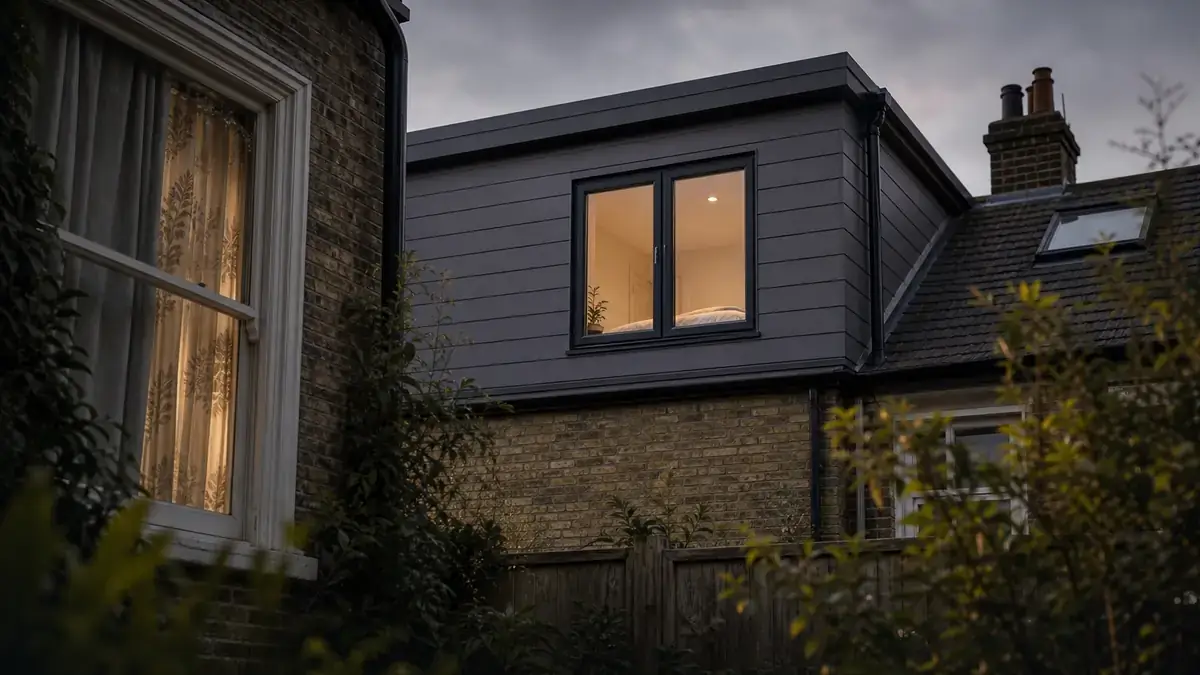
The source is LGO decision 22 007 474. The complaint concerned a window that was meant to protect privacy through obscure glazing and opening restrictions.
This is the part many people miss: the planning story does not stop at "approved".
Approval, condition, enforcement
The decision notice may include privacy-protecting conditions.
The real-world detail may or may not match what the condition required.
The issue becomes one of enforcement and whether the council responds properly.
Exact condition wording, approved drawings and photographs become critical.

What to check after approval
Decision notice. Read every condition, not just the final approval line.
Approved drawings. Check whether the window size, position and opening are shown.
Obscure glazing. Photograph what can be seen, but avoid intrusive or confrontational behaviour.
Enforcement record. Track whether the council logs, investigates and resolves the alleged breach.
Before approval
Object to overlooking and ask for privacy-protecting conditions if the window is likely to be approved.
After approval
Check whether the condition is actually followed, then report precise breaches rather than making a general privacy complaint.
Keep watching after the decision.
Search your postcode and track applications, conditions and amendments near your home.
Search your postcode freeOfficial sources
This article is based on Local Government and Social Care Ombudsman decision 22 007 474. Related PlanWatch guides: how to check planning conditions, overlooking and privacy objections, and planning enforcement when rules are broken.
Frequently asked questions
What is an obscure-glazing condition?
It is a planning condition requiring glass to be obscure or frosted, usually to protect neighbour privacy.
What does non-opening mean in a planning condition?
It depends on the wording, but it usually restricts whether or how far a window can open, often below a specified height.
What if a condition is breached?
Compare the built detail with the approved plans and decision notice, then report the issue to planning enforcement with photos and the application reference.
Why track after approval?
Because conditions, amendments and enforcement can decide whether a development is actually built in the privacy-protecting way the council required.
Disclaimer: PlanWatch provides general information about UK planning processes. This content is not legal advice. Planning law is complex and varies by local authority. Consult a qualified planning consultant or solicitor for advice specific to your situation.