On this page 11 sections
- 01The morning the street changed
- 02The letter that should have existed
- 03Planning is not designed around your shock
- 04What would actually have helped?
- 05The planning issues Mr X raised are the ones people notice too late
- 06The site notice problem
- 07Can you appeal if your neighbour gets permission?
- 08The lesson from the Ombudsman decision
- 09What to do this week
- 10Source trail
- 11Frequently asked questions
The worst time to learn about a planning application is when the builders arrive. By then, the consultation period may be over, the officer report may already be written, and the decision may have been made without your comment in the file.
This story is a dramatized version of a real Ombudsman decision. The people, domestic details and scenes below are fictionalised for privacy and readability, but the planning lesson is real: one neighbour said he only became aware of the application when construction started.
The morning the street changed
At 7:42am, the first sound was not a letter through the door. It was metal on metal.
The kettle had just clicked off. The back window was misted from the steam. Outside, beyond the garden fence, a scaffold pole rose into view where there had been sky the week before. Then another. Then a timber frame.
No one had knocked. No notice had been pushed through the door. No one had asked whether a new home next door might affect privacy, outlook, drainage, or the way the garden felt in the afternoon.
That is the particular anger of a missed planning notification. It is not just that something is being built. It is that the first proper warning can feel like the moment the argument has already moved on without you.
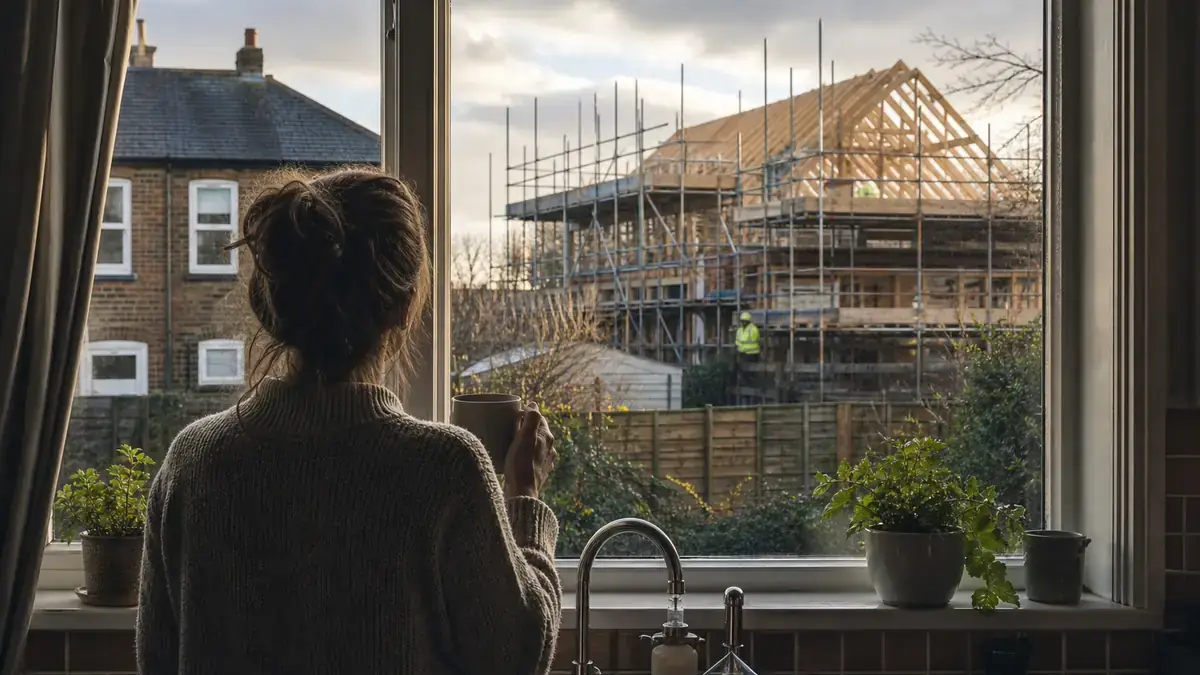
In the real case behind this article, the Ombudsman recorded that the neighbour said he became aware of the planning application when construction started. He complained that he had lost the chance to object.
That is not a small procedural annoyance. In planning, timing is power.
The letter that should have existed
The real decision was about Oldham Metropolitan Borough Council case 20 006 395. The Ombudsman decision was published after a complaint by a resident, referred to as Mr X.
The short version:
The neighbouring site already had outline planning permission for a single dwelling.
The later application dealt with appearance, landscaping, layout and scale.
It also said notification letters were prepared for neighbouring properties.
The council accepted it should have sent a notification letter in line with its own policy.
The Ombudsman found fault in the notification process. The council accepted the notification letter should have been sent.
But here is the uncomfortable part. The Ombudsman did not say the permission would have been refused if Mr X had objected. The decision said the officer had already considered relevant planning issues and that, on balance, the outcome was unlikely to have been different.
That is the part every homeowner needs to understand.
A missed notification can be real fault. It can still fail to unwind the decision.
Planning is not designed around your shock
Most people imagine the system works like this: if something major is proposed next door, the people most affected get told, they object, the council weighs it up, and then a decision is made.
Sometimes that is roughly what happens.
But planning publicity is messier than that. Councils use different combinations of site notices, letters, website publication and sometimes press notices, depending on the type of application and their local policy. For example, Ealing Council's guidance says residents can comment even if they have not been formally consulted, but written comments must be received within 21 days of the consultation starting.
That 21-day window is not long. It is one busy month. It is a holiday. It is a broken printer. It is three weeks of assuming the yellow notice on the lamppost is about a dropped kerb three streets away.
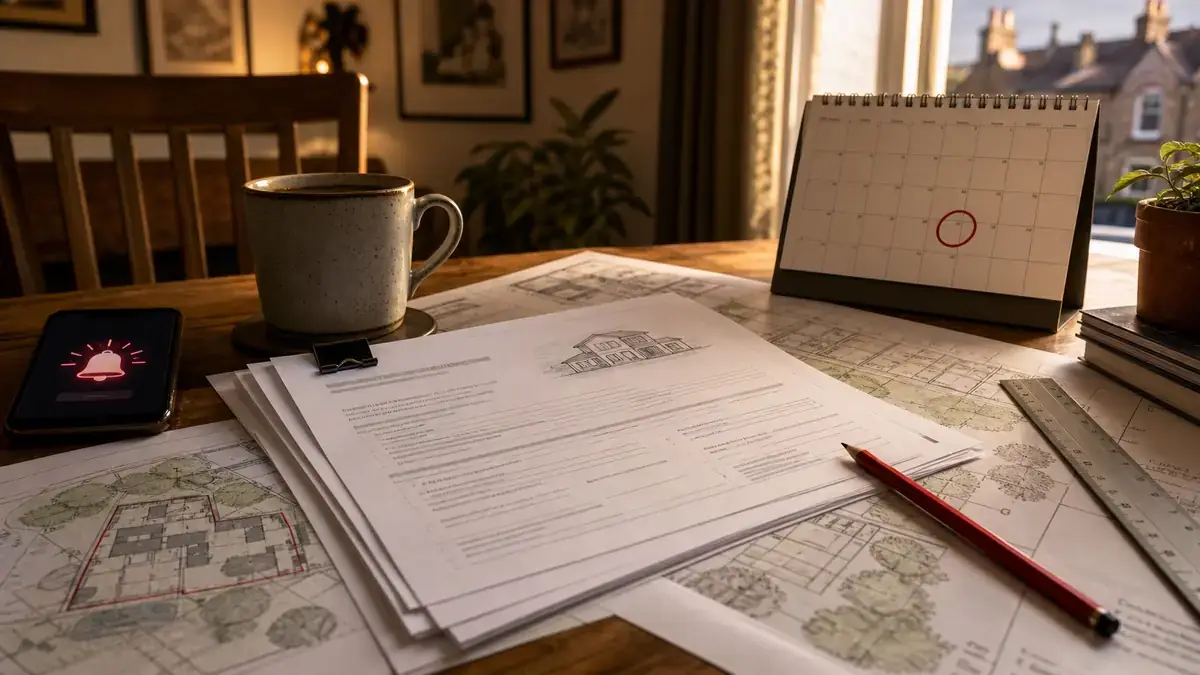
The planning system is not waiting for the moment you feel surprised. It is moving through documents, validation dates, consultation dates, delegated reports, committee lists, conditions and decision notices.
If you only enter the process when the scaffold is up, you may still have options. You can check whether the build matches the approved drawings. You can check conditions. You can report breaches. You can complain if the council failed to follow its own process.
What you may not be able to do is simply rewind the consultation stage and make the council decide the whole thing again.
What would actually have helped?
Not outrage. Not a Facebook post. Not hoping the letter arrives.
The useful thing would have been an earlier signal.
Without early monitoring
The application exists on the council website, but you do not know to search for it. The yellow notice may be missed. The objection period closes. The first undeniable sign is physical work.
With postcode monitoring
You get a prompt when applications appear nearby. You can read the plans, check the site boundary, inspect windows and roof height, and decide whether a planning-related comment is worth making while the file is still live.
This is where PlanWatch has a useful, honest role.
PlanWatch does not stop development. It does not write magic objections. It does not make a planning officer prefer your view over the applicant's drawings.
It changes the point at which you find out.
That is enough to matter.
The planning issues Mr X raised are the ones people notice too late
In the real Ombudsman decision, the neighbour raised concerns around privacy, outlook, topography, windows, overbearing impact, land ownership and drainage. Some of those are planning issues. Some can drift into private land or civil matters. The distinction matters.
The council and Ombudsman focused on whether the decision-making process was flawed in a way that caused significant injustice. They looked at what the case officer had considered, including separation distances, levels, window positions and the officer's assessment of impact.
That is why early reading of the file is so important. A good objection is not a complaint that the proposal feels unfair. It points to planning matters while the planner is still weighing them.
Check the drawings. Look for new side windows, raised platforms, roof terraces, balconies, dormers, extensions and changes in ground level.
Check the officer report. See whether privacy, overlooking, daylight, design, traffic, trees and drainage were considered.
Check the decision notice. Conditions may control drainage, materials, obscure glazing, working hours or details that still need approval.
Check what is being built. If work does not match the approved drawings, that becomes a different question from whether you liked the original permission.
The material planning considerations matter because councils cannot usually decide applications on private frustration alone. Councils commonly look at things like design, privacy, daylight, noise, traffic and parking. They normally give little or no planning weight to private disputes such as loss of property value, covenants or the applicant's personal conduct.
The site notice problem
There is something oddly fragile about a planning site notice.
It can be tied to a lamppost in the rain. It can face the wrong walking route. It can be hidden behind a parked van. It can be ignored because people do not realise a notice on public land might be about a proposal affecting their own garden.
That does not mean site notices are useless. They are part of how publicity works. It does mean relying on the chance of seeing one is a weak personal system.
The better personal system is boring:
- Search your postcode.
- Watch the nearby applications.
- Read anything that touches your boundary, outlook, road, parking, light or privacy.
- Comment early if there is a real planning issue.

Can you appeal if your neighbour gets permission?
This is where many people get caught out.
The normal GOV.UK planning appeal route is for the applicant, or someone acting for the applicant, to challenge a refusal, conditions, or non-determination. Neighbours can usually comment on an appeal, but they do not normally get a general right to appeal someone else's approval through that route. See GOV.UK's planning appeal overview for the applicant appeal framework.
That is why the consultation stage matters so much.
If you miss that stage, your next steps may be narrower:
Process complaint: if the council failed to follow its publicity policy.
Enforcement report: if the build does not match the approved plans or breaches conditions.
Legal advice: if you think there is a serious legal flaw, land ownership issue, boundary dispute or private right involved.
Future monitoring: if conditions, amendments, discharge applications or new applications are likely to follow.
None of those are as simple as commenting before the decision.
The lesson from the Ombudsman decision
The real case is not a neat story where a resident missed one letter, complained, and the planning permission vanished.
It is more revealing than that.
The Ombudsman found fault, but also looked at whether the fault changed the likely planning outcome. That is a hard distinction, but it is the core of the lesson. Planning complaints often turn on process, evidence and causation, not just whether the resident was understandably furious.
The Planning Portal's decision-making guide explains the basic principle: applications are decided against the local development plan unless there is good reason not to. Local rules and the exact application type can change the detail.
So the earlier you know, the better your chances of making the right kind of comment:
The reveal: early awareness does not guarantee a different result. It gives you a fairer shot at putting planning evidence into the file before the council decides.
That is the honest PlanWatch message.
Not "we stop bad developments."
"We help you find out while there is still time to read the plans."
What to do this week
If this story made you think of your own street, do the practical thing now.
Check what is already near you.
Search your postcode, scan the nearby applications, then set up alerts for anything new. Ten quiet minutes now can save you from discovering the next application by the sound of scaffolding.
Search your postcode freeThen build a habit around these checks:
- Look at your own address and immediate neighbours.
- Check anything within sight of your garden, parking space, shared access or road junction.
- Open the plans, not just the summary line.
- Save the reference number.
- If you comment, keep it planning-related and specific.
The point is not to become anti-development. The point is to stop being the last person to know.
Source trail
This article is a dramatized PlanWatch story based on public planning guidance and official decisions. The central case is Local Government and Social Care Ombudsman decision 20 006 395. The 21-day consultation example comes from Ealing Council's planning comment guidance. Appeal-route context comes from GOV.UK's planning appeal overview. Decision-making context comes from the Planning Portal decision-making guide.
Frequently asked questions
What should I do if I was not notified about a planning application?
Start with the council planning file. Save the reference number, decision notice, officer report, consultation dates and approved drawings. Then ask the planning department what publicity was carried out and whether it followed the council's Statement of Community Involvement or local notification policy. If the answer does not stack up, use the council complaints process.
Can I object after planning permission has already been granted?
You can still contact the council, but the normal objection window may have closed. If the permission is granted and the build follows the approved drawings and conditions, your options are usually more limited. If work differs from the approved plans, that may be a planning enforcement issue.
Does planning permission prove the applicant owns the land?
No. Planning permission is not the same as land ownership or boundary approval. Councils usually deal with planning merits, while ownership and boundary disputes can become private legal matters. If a proposal appears to include your land, get advice quickly and keep the planning and civil issues separate.
How can PlanWatch help?
PlanWatch helps you find and monitor planning applications near a postcode. It is not a legal service and cannot guarantee an outcome, but it can make the difference between seeing an application during consultation and only noticing it when work starts.
Disclaimer: PlanWatch provides general information about UK planning processes. This content is not legal advice. Planning law is complex and varies by local authority. Consult a qualified planning consultant or solicitor for advice specific to your situation.