
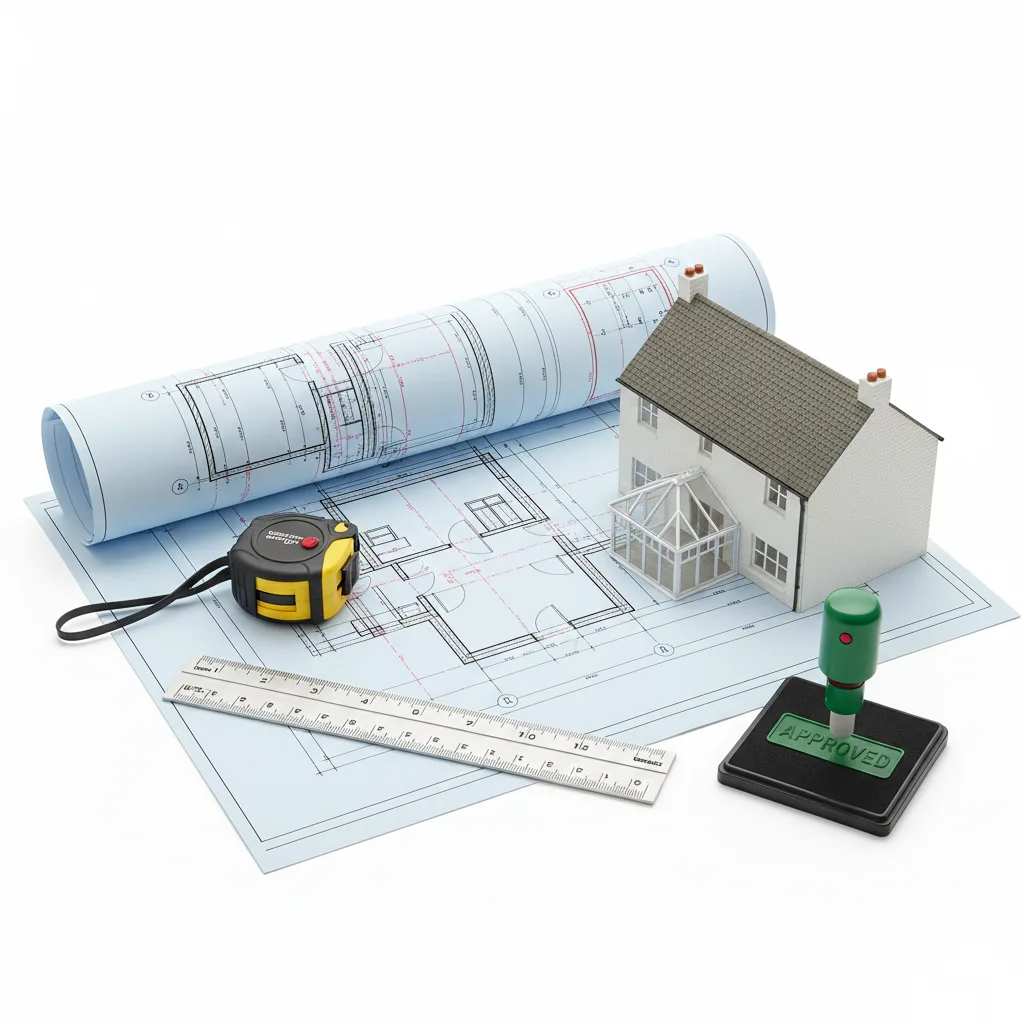
A neighbour building close to the boundary is not automatically breaking planning rules. The important checks are whether the work has planning permission, whether it fits permitted development limits, whether it matches approved drawings, and whether separate party wall or building-control rules apply.
Search the address and compare the approved drawings with the work on site ->
Boundary issues are stressful because they are visible every day. Footings appear near the fence. A wall rises where you expected a gap. Scaffolding comes onto your side. But planning, party wall law, building regulations and boundary ownership are different systems. You need to separate them before deciding what to do.
The GOV.UK party wall guidance explains that party wall matters are separate legal duties between neighbours. Planning questions are different: permission, permitted development, approved drawings, conditions and enforcement.
Step 1: Search The Planning Record
Search by postcode and exact address. Look for:
- A current planning application.
- A granted householder permission.
- A lawful development certificate.
- Prior approval.
- Non-material amendments.
- Discharge of conditions.
- Enforcement records, if public.
If there is an approval, download the approved drawings. If there is no approval, the neighbour may still argue that the work is permitted development. That is why the next step is evidence, not assumptions.
Step 2: Compare Against The Drawings
Check:
| Item | Why It Matters |
|---|---|
| Distance to boundary | Shows whether the work matches the approved site plan |
| Wall height and roof height | Can affect permitted development and amenity |
| Depth and footprint | Extensions often breach by being longer than approved |
| Window positions | Side windows can create privacy issues |
| Materials and roof form | May be controlled by plans or conditions |
| Levels | A raised site can make a wall more dominant |
Do not rely on a tape measure taken from uncertain boundary points unless you know what you are measuring. Photos, approved plans and visible differences are often safer for a first report.
Step 3: Separate Planning From Party Wall
Planning controls whether development is acceptable in planning terms. Party wall rules deal with notices and works near shared walls or boundaries. Building regulations deal with construction standards. Boundary ownership is a property-law issue.
A council planning officer may not resolve a boundary dispute. But if the building is materially different from approved plans, too high, too deep, or causing planning harm, that can still be relevant.
Step 4: If You Think There Is A Breach
Contact planning enforcement with:
- The address.
- The planning reference, if any.
- A short description of the concern.
- Dated photographs.
- The condition or approved drawing you think is not being followed.
- The date work started if known.
Keep it factual. "The rear wall appears to extend beyond the approved footprint on drawing 102 Rev B" is stronger than "my neighbour is building illegally."
When To Object To A Live Application
If the application is still pending, object on planning grounds. Close-to-boundary issues may support objections about overbearing impact, loss of light, outlook, privacy, drainage, maintenance access, tree roots or design. Do not make boundary ownership the whole objection unless it creates a planning issue the council can decide.
If The Work Is Already Underway
Act quickly, but keep the evidence clean. Take dated photographs from your own land or from public places. Save screenshots of the approved drawings and decision notice. Write down when you first saw foundations, walls, roof works or window openings. If you speak to the neighbour or builder, keep a note of what was said.
Then check the planning portal again before reporting. There may be a later non-material amendment, lawful development certificate or discharge-of-condition application that explains what is happening. If there is not, your enforcement report will be stronger because you have already checked the obvious records.
Official Sources
- GOV.UK party walls and building work
- GOV.UK search the register of planning decisions
- Planning Portal common projects
Related PlanWatch Guides
- Building Too Close To Boundary
- Planning Objection For Overbearing Impact
- How To Find Approved Planning Drawings
- Neighbour Started Building Without Planning Permission
Frequently Asked Questions
Can my neighbour build right up to the boundary?
Sometimes, but it depends on planning permission, permitted development limits, building regulations, party wall rules and the exact position of the boundary.
Is building close to the boundary automatically a planning breach?
No. The issue is whether the work has permission, fits permitted development rules, or differs materially from approved plans.
What should I check first?
Search the planning record, find approved drawings, compare the built work to those drawings, and keep dated evidence.
Are party wall matters handled by the planning department?
No. Party wall matters are separate from planning. They may still matter legally, but the planning department usually decides planning issues.
The Point To Remember
Do not start with accusations. Start with the planning record, approved drawings, dates and evidence. Boundary disputes are messy; factual planning checks give you the best route forward.
Turn this guide into your objection letter — £9.99
Tell the Objection Letter Builder which application concerns you and why, and it drafts a formal letter around the material planning considerations covered here — ready to review and submit to your council. One-off £9.99, free on Pro & Business plans.
Build my objection letterWant to know if there's a planning application near you?
Enter your postcode to see what's been submitted in your area — completely free.
Search Your Postcode FreeDisclaimer: PlanWatch provides general information about UK planning processes. This content is not legal advice. Planning law is complex and varies by local authority. Consult a qualified planning consultant or solicitor for advice specific to your situation.