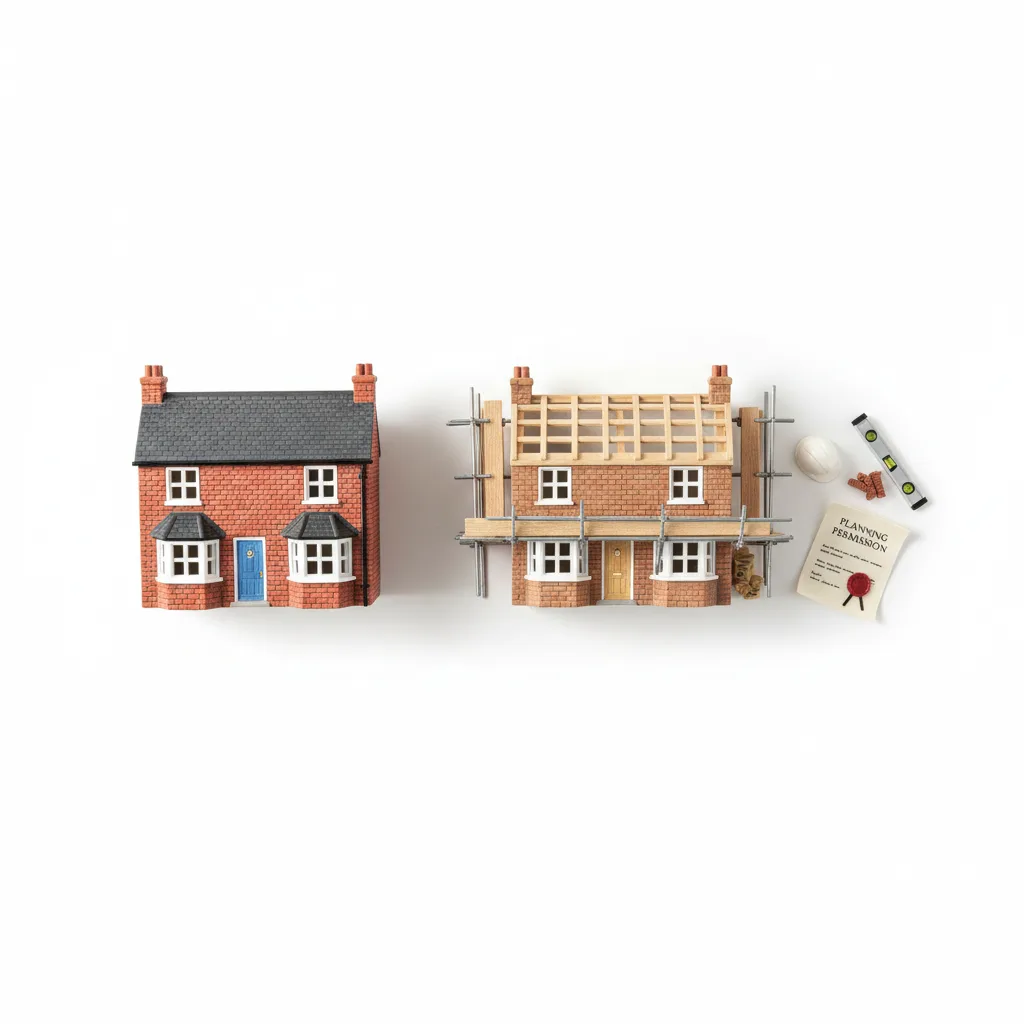

Your neighbour does not need your permission to build an extension — whether under permitted development rights or with planning permission from the council. PD extensions can extend up to 4m from the rear wall (detached) or 3m (semi/terraced) without any planning application. If a planning application has been submitted, you have 21 days to object on material planning grounds. If the extension is PD, your main protections are the Party Wall Act and civil law (right to light). This guide explains your rights and practical steps.
First: Check If They Need Planning Permission
🔍 Affected by this? Check planning applications near you — Search your postcode free →
Key Extension PD Facts (England, 2024)
- Class A: rear extensions up to 4m (detached) or 3m (semi/terraced)
- Larger home extension scheme: up to 8m/6m with prior approval (£120)
- Max eaves height: 3m | Side extensions: single storey only
- 50% max garden coverage (all extensions + outbuildings combined)
- Party Wall Act may apply for work near shared boundaries
- Neighbours have no veto over PD extensions
Not all extensions require planning permission. Under Permitted Development rules, your neighbour may be allowed to build without applying.
Extensions Often Allowed Without Permission
- Single-storey rear extensions up to 4m (detached) or 3m (attached)
- Can extend to 8m/6m with Prior Approval notification
- No wider than half the width of the original house
- Not forward of the principal elevation
Extensions That Usually Need Permission
- Two-storey extensions
- Side extensions in some cases
- Extensions exceeding size limits
- Properties in conservation areas, AONB, or National Parks
- Flats and maisonettes
If your neighbour is also adding a garden room or outbuilding, see our guide on garden rooms and outbuildings for the specific permitted development rules that apply.
How to check: Search your council's planning portal for recent applications at their address.
If They Have Planning Permission
If permission was granted, your main concern is whether they're building according to the approved plans.
You Can:
- View the approved plans on the council's website
- Check if the build matches the drawings
- Report concerns to planning enforcement if it doesn't
You Can't:
- Object after permission is granted (the time for that has passed)
- Force them to change approved plans
- Claim compensation for loss of value (generally)
If There's an Active Application
If you've received a neighbour notification letter or found an active application:
You Have the Right To:
- View all submitted documents
- Submit a written objection (usually within 21 days)
- Speak at the planning committee (if it goes to committee)
Grounds for Objection
Focus on material planning considerations:
✅ Valid Objections:
- Loss of light to your windows
- Overlooking and privacy impact
- Overbearing impact (sense of enclosure)
- Design out of keeping with the area
- Noise from relocated services
- Impact on trees or wildlife
- Highway safety
❌ Not Valid Objections:
- Loss of property value
- Loss of view
- Construction disruption
- Boundary disputes (civil matter)
- Personal issues with your neighbour
- Competition for business
What About Party Walls?
If the extension touches or is near your shared boundary, the Party Wall Act may apply.
Your neighbour must serve notice if:
- Building on or near the boundary line
- Cutting into a party wall
- Excavating within 3-6 metres of your foundations
Your Rights Under Party Wall Act:
- Receive proper notice (1-2 months before work)
- Consent or dissent
- Have a surveyor appointed (at their expense)
- Have your property's condition recorded
- Claim for any damage caused
This is separate from planning permission — they need both.
What If They're Building Without Permission?
If you believe they're building without required permission:
- Search the planning portal — confirm no application exists
- Report to enforcement — contact your council's planning enforcement team
- Provide evidence — photos, dates, description of works
- Wait for investigation — council will visit and assess
The council may:
- Confirm it's permitted development (no action)
- Ask them to apply retrospectively
- Serve an enforcement notice
Practical Steps to Take
1. Talk to Your Neighbour First
Many disputes can be resolved with a conversation. They may:
- Not realise the impact
- Be willing to adjust plans
- Explain the timeline
2. Document Everything
- Take dated photos
- Keep copies of correspondence
- Note times of disturbance
- Record any damage
3. Know the Timelines
| Situation | Deadline |
|---|---|
| Object to planning application | Usually 21 days from notification |
| Party Wall response | 14 days from notice |
| Enforcement action | 10 years (breach from 25 Apr 2024); old 4-10 years rule for earlier breaches |
4. Get Professional Advice If Needed
For complex cases, consider:
- Planning consultant (for planning objections)
- Party wall surveyor (for boundary issues)
- Solicitor (for legal disputes)
Common Questions
"They didn't notify me — is that allowed?"
Councils notify nearby properties, but there's no legal requirement to notify everyone. Your neighbour doesn't have to tell you personally. Check the planning portal regularly for applications near you.
"Their extension will block my light — can I stop it?"
You can object on grounds of loss of light, but it's not guaranteed to succeed. Councils consider impact but have to balance your concerns against their rights to develop.
"Can I claim compensation for reduced property value?"
Generally no. There's no right to compensation for loss of value due to neighbouring development (with very limited exceptions for major infrastructure).
"The builders are making noise at 7am — is that allowed?"
Construction hours are often controlled by conditions. Check the planning permission for approved working hours. If they're breaching conditions, report to enforcement.
Key Takeaways
- Check if they need permission — they may not
- Object during the application stage — not after
- Focus on material considerations — not personal issues
- Party Wall Act is separate — and gives you strong rights
- Talk first, escalate later — most issues can be resolved
Monitor Applications Near You
Don't get caught out by surprise developments.
Get notified whenever a new application is submitted near your property.
This guide is for general information only and does not constitute legal advice. For advice specific to your situation, consult a qualified planning consultant or solicitor.
Check Your Area
Don't wait until it's too late. Search your postcode to see all planning applications near you.
Further Reading
Related Guides
- How to Object to a Planning Application
- My Neighbour's Extension is Blocking My Light
- Someone Building Too Close to My Boundary
- My Neighbour is Building a Garden Room / Outbuilding
- How to Appeal a Planning Decision
- What Are Material Planning Considerations?
- Permitted Development Rights Explained
- planning enforcement when rules are broken
- conservation areas and planning
- party wall act explained
- Do I Need Planning Permission for a Conservatory?
- Do I Need Planning Permission for a Garage?
Check Planning in Your Area
- Leeds Planning Applications
- Manchester Planning Applications
- Birmingham City Council Planning Applications
- Bristol Planning Applications
Frequently Asked Questions
Can my neighbour build an extension without my permission?
Yes. Your neighbour doesn't need your permission for an extension — whether under permitted development or with planning permission from the council. You can object to a planning application, but you have no veto right.
How close can an extension be to my boundary?
There is no minimum distance in planning law. PD extensions can be built right up to the boundary. Outbuildings within 2m of a boundary are limited to 2.5m height. Party Wall Act protections may apply for work near shared boundaries.
Can I object to my neighbour's extension?
Only if it requires planning permission. If it's permitted development, there's no application to object to. If a planning application or prior approval notification has been submitted, you have 21 days to submit comments.
What if my neighbour's extension blocks my light?
Loss of daylight and sunlight is a material planning consideration. If there's a planning application, cite BRE daylight guidelines. You may also have a civil 'right to light' claim under the Prescription Act 1832 if your windows have had light for 20+ years.
Does my neighbour need a Party Wall Agreement?
Possibly. The Party Wall etc. Act 1996 applies if the extension involves: work on a shared wall, building at the boundary, or excavation within 3m of your foundations (6m for deep excavations). Your neighbour must serve notice.
What if the extension exceeds permitted development limits?
Report it to your council's planning enforcement team. If the extension exceeds PD limits and no planning permission has been granted, the council can investigate and require removal or a retrospective application.
Browse Planning by Region
Planning rules — especially permitted development rights — vary significantly depending on where you live. Article 4 directions in London and conservation areas across the South East can remove PD rights entirely.
- Planning in London — 32 boroughs, extensive Article 4 directions removing PD rights
- Planning in the South East — High concentration of conservation areas and Green Belt restrictions
- Planning in the North West — Manchester growth corridor, post-industrial regeneration areas
- Planning in Yorkshire — Mix of urban renewal and rural AONB protections
Turn this guide into your objection letter — £9.99
Tell the Objection Letter Builder which application concerns you and why, and it drafts a formal letter around the material planning considerations covered here — ready to review and submit to your council. One-off £9.99, free on Pro & Business plans.
Build my objection letterWant to know if there's a planning application near you?
Enter your postcode to see what's been submitted in your area — completely free.
Search Your Postcode FreeDisclaimer: PlanWatch provides general information about UK planning processes. This content is not legal advice. Planning law is complex and varies by local authority. Consult a qualified planning consultant or solicitor for advice specific to your situation.