
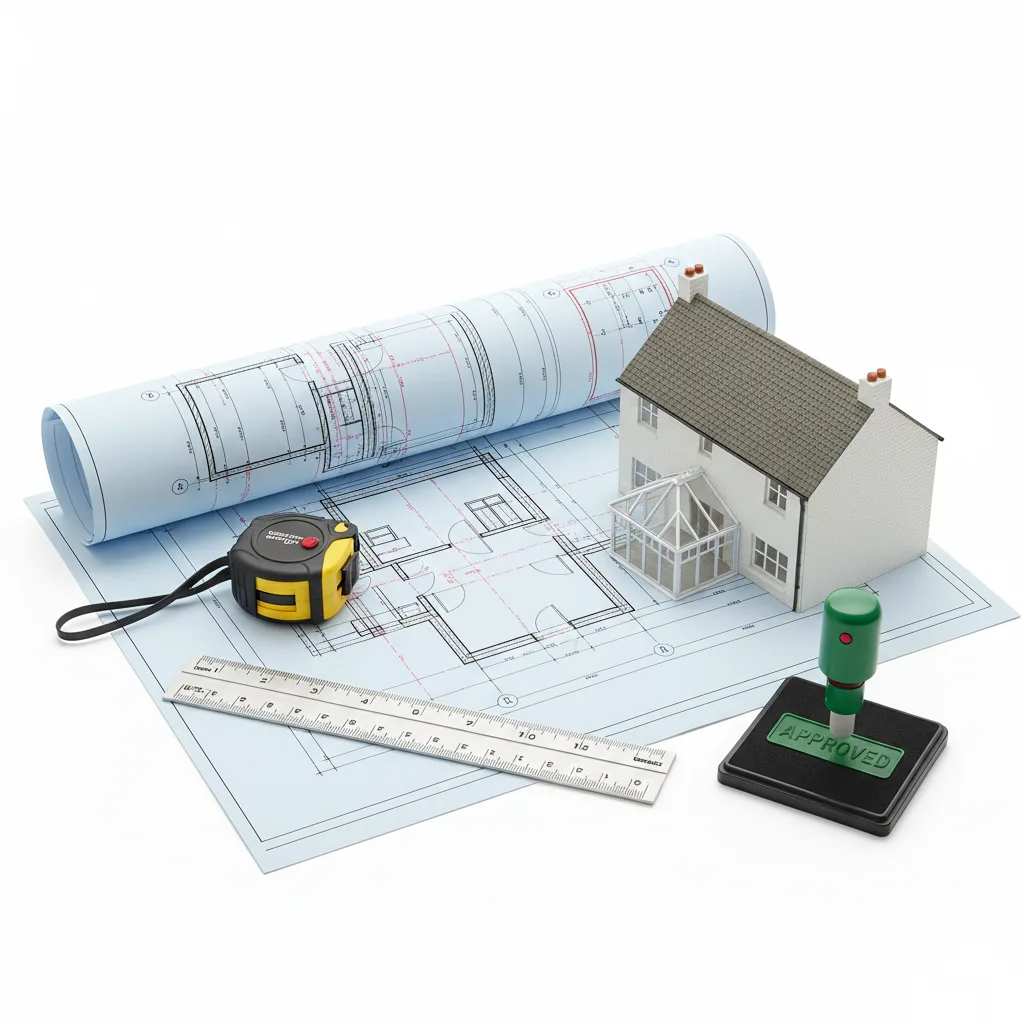
Yes — roughly 10-15% of all planning applications in England are refused each year (DLUHC statistics), with higher refusal rates for major developments and Green Belt proposals. Refusals must cite specific policy conflicts and material planning considerations — councils cannot refuse for personal or non-planning reasons. If refused, you can revise and resubmit free within 12 months, or appeal to the Planning Inspectorate where around 30% of appeals succeed. This guide covers the most common reasons for refusal, the rules councils must follow, and your options if you receive a refusal.
How Planning Decisions Are Made
Key Planning Refusal Statistics (England, 2024)
- 10-15% of applications refused nationally (DLUHC)
- ~30% of planning appeals are allowed (Planning Inspectorate)
- 6-month deadline to appeal a refusal (12 weeks for householder appeals)
- First resubmission within 12 months: free of charge
- ~90% of applications decided by officers under delegated powers
- Written representations appeals take 4-8 months on average
Before looking at refusals, it helps to understand how councils make decisions. Every planning application is assessed against:
- The development plan: This includes the local plan and any neighbourhood plan. Applications that accord with the development plan should be approved unless material considerations indicate otherwise.
- National Planning Policy Framework (NPPF): Government planning policy that councils must have regard to.
- Material planning considerations: Any factor relevant to the use and development of land.
The council must weigh all these factors and make a balanced judgement. Crucially, they must provide clear and precise reasons for any refusal.
The Most Common Reasons for Refusal
1. Impact on Neighbouring Properties
The single most common reason for refusal of householder applications is the impact on neighbours. This includes:
- Loss of light: The proposal would significantly reduce daylight or sunlight to neighbouring habitable rooms
- Loss of privacy: Overlooking from new windows, balconies, or raised platforms
- Overbearing impact: The development would be visually dominant and oppressive when viewed from a neighbouring property
- Noise and disturbance: Particularly for commercial applications or those involving increased traffic
Councils apply the 45-degree rule and other guidelines to assess impact on light. They also consider established separation distances — typically 21 metres between rear-facing habitable room windows.
2. Design and Character
Proposals that don't fit with the character of the area are frequently refused. Common design issues include:
- Materials that clash with the existing streetscape
- Scale and massing that's out of keeping with surrounding buildings
- Architectural style that doesn't complement the area
- Loss of important features (such as front gardens to parking)
- Overdevelopment of the plot
The NPPF states that developments should be "sympathetic to local character and history" while not preventing innovation or change.
3. Highway Safety and Parking
Transport-related reasons for refusal include:
- Insufficient parking provision
- Dangerous access arrangements
- Increased traffic on unsuitable roads
- Inadequate visibility splays
- Impact on pedestrian safety
Highway authorities are statutory consultees, and their objections carry significant weight.
🔍 Affected by this? Check planning applications near you →
4. Policy Conflicts
Applications that directly conflict with adopted planning policies face a steep uphill battle:
- Building in the Green Belt without very special circumstances
- Development in flood zones without passing the sequential and exception tests
- Loss of protected open space or employment land
- Development in the countryside where policy restricts this
- Exceeding density guidelines or height limits
5. Ecology and Environment
Environmental concerns that lead to refusal include:
- Impact on protected species (bats, newts, badgers, etc.)
- Loss of ancient woodland or important habitats
- Insufficient ecological surveys
- Failure to demonstrate biodiversity net gain (now mandatory)
- Impact on air quality or water quality
6. Heritage Impacts
For applications affecting or near heritage assets:
- Harm to listed buildings or their settings
- Impact on conservation areas and their character
- Archaeological concerns that haven't been adequately addressed
- Loss of locally listed buildings or non-designated heritage assets
7. Insufficient Information
Applications can be refused simply because the council doesn't have enough information to make a decision. Common deficiencies include:
- Missing or inadequate ecological surveys
- Incomplete flood risk assessments
- Absence of required heritage assessments
- Insufficient design justification
- Missing neighbour notification (though this is the council's responsibility)
What Cannot Be a Reason for Refusal
Not everything counts as a valid planning reason. The following are not material planning considerations and cannot lawfully be used as reasons for refusal:
- Loss of property value: Financial impact on neighbouring properties
- Loss of a view: There's no right to a view (though impact on outlook is different)
- Competition: That a similar business already exists nearby
- Personal circumstances of the applicant: Planning permission runs with the land, not the person
- Moral objections: Opposition based on the type of person or business
- Boundary disputes: Private property disputes are civil matters
- Covenants: Restrictive covenants are separate from planning
- Construction disruption: Temporary inconvenience during building work
If a council refuses an application citing non-material considerations, that refusal is vulnerable to being overturned on appeal.
The Role of Public Objections
Neighbour objections are considered as part of the planning process, but they don't determine the outcome. An application with 100 objections can still be approved if it complies with planning policy. Equally, an application with no objections can be refused if it conflicts with policy.
What matters is whether the objections raise valid planning grounds. Officers will consider the substance of objections, not simply the number.
However, the volume of objections can influence whether an application is decided by officers under delegated powers or referred to the planning committee for a political decision. Committee decisions are less predictable than officer decisions.
What to Do If Your Application Is Refused
1. Read the Decision Notice Carefully
The decision notice will list the specific reasons for refusal. These are crucial because they tell you exactly what the council's concerns are. Each reason should reference a specific planning policy.
2. Talk to the Planning Officer
Ring the case officer and ask for an informal discussion. They can often explain in more detail what changes would address their concerns. This conversation is invaluable for deciding your next steps.
2a. Consider Retrospective Permission (if already built)
If development has already been carried out, you can still apply for retrospective planning permission. A refusal of a retrospective application is no different from any other refusal — you have the same rights of appeal.
3. Your Three Main Options
Option A: Revise and Resubmit
The most common approach. Address each reason for refusal through design changes, additional information, or a scaled-back proposal. Your first resubmission within 12 months is free of charge.
Option B: Appeal to the Planning Inspectorate
You have the right to appeal any refusal within 6 months of the decision date (12 weeks for householder appeals). An independent planning inspector will reconsider your application from scratch.
Option C: Accept the Decision
Sometimes the council is right, and the proposal simply isn't appropriate. Accepting the decision and exploring alternative approaches can save time and money.
Understanding the Appeal Process
| Appeal Method | Complexity | Typical Duration | Best For |
|---|---|---|---|
| Written representations | Lowest | 4-8 months | Householder and minor applications |
| Hearing | Medium | 6-10 months | Complex cases needing discussion |
| Inquiry | Highest (quasi-legal) | 12+ months | Major developments, legal arguments |
Appeals are decided by the Planning Inspectorate, an independent government body. There are three types of appeal:
- Written representations: The most common method. You and the council exchange written statements. Typically decided within 4-8 months.
- Hearing: An informal discussion chaired by the inspector. Used for more complex cases. Takes 6-10 months.
- Inquiry: A formal, quasi-legal process with evidence given under oath. Used for major developments. Can take 12+ months.
Nationally, about 30% of appeals are allowed (successful for the applicant). Householder appeals have a slightly higher success rate.
🔍 Affected by this? Check planning applications near you →
How to Avoid Refusal
Get Pre-Application Advice
The single best investment you can make. Pre-application discussions with the council let you test your ideas before spending money on detailed drawings and reports. If a neighbour's application has been approved that you believe is harmful, our guide on how to object to a planning application explains how to engage the process effectively.
Study the Local Plan
Read the relevant policies in your council's local plan. If your proposal conflicts with policy, you need to demonstrate why an exception should be made — and that's always harder.
Engage Your Neighbours
Talk to your neighbours before you submit. Understanding their concerns early lets you modify your design to address them. A letter explaining your plans with an invitation to discuss goes a long way.
Use Professionals
Architects and planning consultants deal with planning applications every day. They know what works and what doesn't in your local area. Their expertise often pays for itself through avoiding refusal.
Look at What's Been Approved Nearby
Search your council's planning register for similar developments that have been approved. These set useful precedents and show you what the council considers acceptable.
Submit Complete Applications
Missing documents and inadequate drawings create a negative impression from the start. Submit everything the validation checklist requires, and make sure your drawings are accurate and clear.
Frequently Asked Questions
How many times can a planning application be refused?
There's no limit on how many times you can apply. However, submitting essentially the same application repeatedly is unlikely to yield a different result unless circumstances have changed (such as a new local plan or a relevant appeal decision).
Can the council refuse a planning application after approving a similar one nearby?
Yes, but the approval is a material consideration that carries weight. If the circumstances are genuinely comparable, the council needs to explain why a different decision is justified. Precedent is powerful in planning.
Does a planning refusal affect my property value?
A refusal itself doesn't directly affect property value. However, if it becomes known that a property can't be extended or developed in a certain way, this could influence what buyers are willing to pay. Refusals are public records.
Can I claim costs if I win my planning appeal?
Yes. If the council behaved unreasonably — for example, refusing without proper planning reasons, or not turning up to a hearing — the inspector can award costs against the council. This is relatively uncommon but does happen.
What happens if the council doesn't decide my application at all?
If the council fails to decide within the statutory period (8 or 13 weeks) and you haven't agreed an extension of time, you can appeal on grounds of non-determination. The inspector then makes the decision the council should have made.
This guide was researched and written by the PlanWatch team. PlanWatch monitors planning applications across 300+ UK councils.
Check Your Area
Search your postcode to see planning applications near you.
Further Reading
Related Guides
- How to Appeal a Planning Decision
- Permitted Development Rights Explained
- Planning Enforcement: When Rules Are Broken
- What Are Material Planning Considerations?
- Conservation Areas and Planning
- How to Object to a Planning Application
- Retrospective Planning Permission
Check Planning in Your Area
- Leeds Planning Applications
- Manchester Planning Applications
- Birmingham City Council Planning Applications
- Bristol Planning Applications
Browse Planning by Region
The appeals process differs across the UK. England and Wales use the Planning Inspectorate (PINS), while Scotland has its own system through the DPEA.
- Planning in London — High volume of appeals, GLA call-in powers for major schemes
- Planning in the South East — Frequent Green Belt and AONB appeal issues
- Planning in Scotland — Separate appeals system (DPEA), different timescales and procedures
- Planning in Wales — PINS Wales handles appeals under Planning Policy Wales (PPW)
Want to know if there's a planning application near you?
Enter your postcode to see what's been submitted in your area — completely free.
Search Your Postcode Free